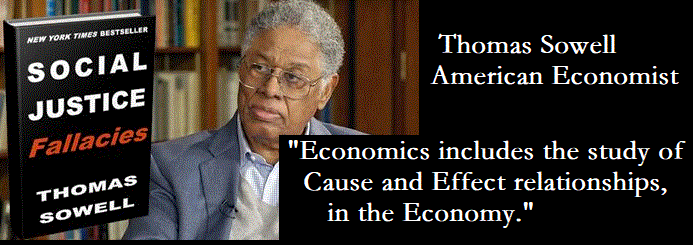
In their site, Durham University describes the study of economics as ‘not only about money, numbers or mathematics. It’s another way of looking at the world. To truly understand economics, you will also study aspects of politics, history, psychology and sociology.’
Excerpts from the Speech on Lesson Plans – By Deena
Ice Breaker: Why some countries are rich; and some, poor?
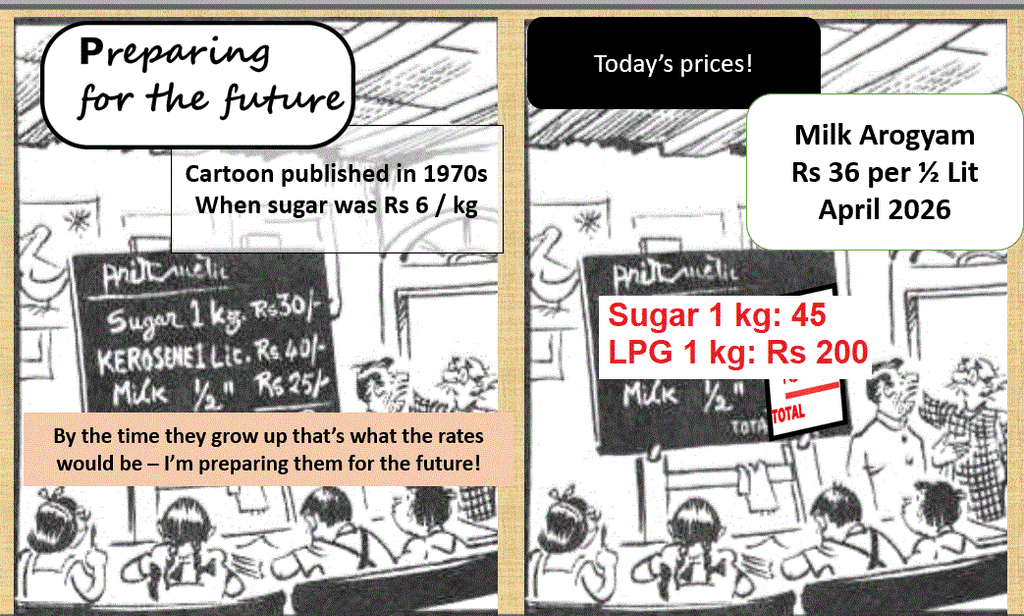
My Grandpa talks about his times, 1960s; when 1 litre petrol was Rs 3.60. Are increase in prices here to stay?
Reservations: There may be apprehensions on introducing this subject to STEM students as being akin to opening up a front that may fuel restlessness among the youth; lowering their employability in terms of compliance with organizational rules and behaviour.
On the other hand, the counter arguments are heavily in favor, more so due to the current transience to AI driven organizations and economies. After all, with Democracies having lowered voting rights to age 18 while in India, the age of marriage has been raised to 21 – there remains a hunger in youth that goes beyond Science and Arts to understand the System of the World they are entering into.
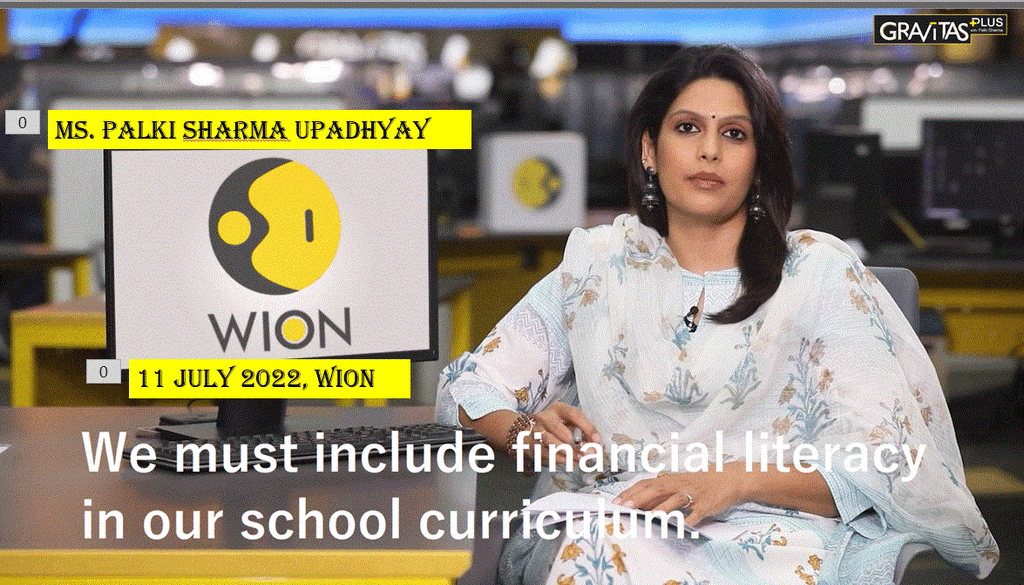
Quite right. After all, what is Education without Financial Literacy?
The Study of Economics may therefore be presented as Systems by which nations trade with each other as well as Sub-systems within nations. A basic example of Systems being the Trade in Energy such as Oil; Garment Exports and IT services. For Subsystems the choicest topics may be Farm Economies, Housing and Real Estate as well as any of the steel based industry, typically automobiles.
Ice Breaker: In this day and age, why do we have wars? What are the main causes?
—————————————Draft ———————————————
The Proposed ‘Economics for Schools is available for those interested. It includes, apart from the Chart of Topics, corresponding writeups and examples,
Under Review by V. Dinesh, MA Economics